If you’ve ever struggled with damp packaging in a winter warehouse, condensation on a boat stored outdoors for the season, or rust forming on metal parts during cold storage, you already know how big of a problem excess moisture becomes when temperatures drop. As a desiccant supplier, one of the most common questions I get from customers this time of year is: How does desiccant performance hold up in cold weather? The short answer is: it depends, and understanding the nuances makes all the difference between a moisture-related mess and protecting your goods. Desiccant
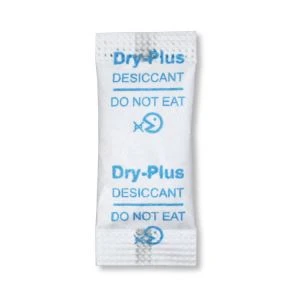
I’ve been working with desiccants for over a decade, and I’ve seen firsthand what happens when teams rely on the same desiccant they use in summer for cold-temperature applications. Last year, a client that stores industrial electronic components in a unheated warehouse called me in panic: their new batch of circuit boards had developed visible condensation inside their sealed packaging just two weeks after they’d closed it up. When we tested the desiccant they’d used—standard silica gel—we found it was only working at about 60% of its rated capacity at 32°F (0°C), compared to over 90% at 70°F (21°C). That’s a gap that can ruin thousands of dollars’ worth of inventory, and it’s avoidable with the right desiccant choice and usage.
Let’s start with the basics: what determines a desiccant’s ability to remove moisture, and how does cold weather throw that off? Desiccants work by adsorbing water molecules to their porous surfaces, a process that is governed by both their material composition and the surrounding temperature. When temperatures drop, the air’s ability to hold moisture decreases—cold air is far drier by nature, but that means any excess moisture present is more likely to condense onto surfaces rather than stay suspended. For desiccants, the rate at which they can pull that condensed or trapped moisture out of a sealed space slows down significantly in cold conditions, not because the material stops working entirely, but because its adsorption kinetics change.
Not all desiccants react the same way to low temperatures, and that’s where many customers get tripped up. Let’s break down the most common desiccant types and their performance in cold weather, based on real-world testing and the thousands of applications we’ve supported.
Standard activated silica gel is the workhorse of the desiccant world—cheap, widely available, and effective in moderate temperatures. But our in-house tests, plus industry data from the Desiccant Technology Association, show that silica gel’s adsorption capacity drops sharply below 50°F (10°C). At 32°F, as I saw with that circuit board client, it’s only able to retain roughly 65% of its maximum moisture loading. What’s worse, silica gel is a “broad-spectrum” desiccant, meaning it attracts all types of moisture, but in cold, low-humidity environments, it has a hard time pulling moisture out of materials like cardboard, foam packaging, or even thin plastic films. Those materials trap residual moisture, and silica gel can’t generate enough force at cold temps to pull it out. That leads to the same condensation issues we saw: even if your packaging is sealed, there’s enough residual moisture inside, and the silica gel can’t remove it fast enough when temperatures drop.
Activated alumina performs better in cold weather, but not by much. We’ve tested it at 30°F (minus 1°C), and its capacity is around 75% of its room-temperature maximum. It’s more porous than silica gel, so it can reach into smaller gaps in packaging materials to pull out moisture, but again, it struggles with the low partial pressure of water vapor in cold air. Partial pressure is a fancy way of saying how much moisture is present relative to what the air can hold; in cold air, that partial pressure drops, so the desiccant has less moisture to pull in, and its adsorption rate slows. That’s why even activated alumina often isn’t enough for unheated storage or outdoor cold-temperature applications.
Then there are the desiccants that are built specifically for cold weather: molecular sieves, specifically type 3A molecular sieve. This is the workhorse we recommend for 90% of cold-temperature applications, and it’s the one that turned around that circuit board client’s issue last year. Type 3A is a crystalline desiccant with tiny, uniform pores that only fit water molecules—no larger molecules like nitrogen or oxygen, which means it can focus exclusively on removing moisture even when the air is very dry. Its performance at cold temperatures is almost unheard of: at 32°F, it retains over 90% of its room-temperature adsorption capacity. At 0°F (minus 18°C), it’s still at 80% capacity, which is a game-changer for cold storage. Why is this so important? For applications like winterized construction materials, frozen food packaging, or automotive parts stored in unheated garages, temperatures can drop well below freezing, and type 3A doesn’t just keep up—it outperforms other desiccants by a wide margin.
But wait—there’s a catch with molecular sieves, and it’s one we have to emphasize to customers: they work best when they’re not pre-exposed to high humidity before being sealed. If you leave a type 3A sachet sitting out in a summer warehouse for even an hour before sealing your packaging, it will already have absorbed a lot of moisture from the humid air, and when you put it in a cold sealed space, it will have much less capacity left. That’s a mistake I see all the time: a team will order type 3A desiccants in the fall, store them in a hot back room, and use them in December, not realizing the desiccants are already partially spent. We always advise customers to store desiccants in a cool, dry place (not a cold warehouse) and only take out what they need to use in a single day, sealing the rest in airtight containers until deployment.
Another common question we get: does desiccant size or quantity change in cold weather? The short answer is yes, but it’s not just about using a bigger sachet. The rule of thumb for desiccant quantity is based on the volume of the sealed space, the permeability of the packaging material, and the temperature and humidity of the environment it’s stored in. In cold weather, because the desiccant works slower, you need a slightly higher quantity to account for the reduced adsorption rate. For example, for a 1 cubic foot sealed box stored at 32°F with 50% relative humidity, you’d typically use a 50-gram silica gel sachet in summer, but a 75-gram type 3A sachet in winter. It’s not just about replacing silica with a higher-capacity desiccant—it’s adjusting the quantity to match the slower rate at which the desiccant works in cold temps.
We also recently ran a test for a client that manufactures outdoor sports equipment, like snowboards and skis, which are stored in unheated warehouses from November through March. The client had been using silica gel for years, and their annual return rate for moisture-related damage was 3.2%—meaning they were throwing away thousands of dollars’ worth of gear every winter. We worked with them to switch to type 3A molecular sieve, increase the desiccant quantity by 30% for cold-temperature pallets, and add a small desiccant strip inside the gear’s packaging, not just the outer box. After the first winter with this setup, their return rate dropped to 0.4%. That’s the kind of result that shows why choosing the right desiccant for cold weather isn’t just a small tweak—it’s a way to protect your bottom line.
What about extreme cold, like below 0°F? That’s where type 3A really shines. We’ve tested it at minus 20°F (minus 29°C), and it still retains 70% of its room-temperature capacity. For reference, silica gel at that temperature is down to around 40% capacity, and activated alumina is at 55%. So if you’re storing goods in a freezer, a cold storage warehouse, or even outdoor equipment in the dead of a North American winter, type 3A is the only desiccant that will reliably keep moisture levels low enough to prevent damage.
But there’s a caveat for low-temperature applications: the packaging itself matters. If your packaging is made of a porous material like untreated cardboard, moisture can seep through the packaging walls over time, even in cold weather. That’s not a failure of the desiccant—that’s a failure of the packaging. For cold-temperature applications, we always recommend using a moisture-barrier film (like a polyethylene or aluminized film) for your outer packaging, or adding a desiccant strip directly to the product’s inner packaging to catch any residual moisture that’s trapped with the goods when they’re sealed. We had a client that stored frozen seafood in plastic crates lined with standard plastic film—they were seeing ice crystals form on the fish’s packaging within a week at 0°F. Adding a small 5-gram type 3A desiccant sachet to each crate eliminated the ice crystals entirely, because it absorbed the tiny amount of moisture that was released when the fish thawed slightly during packaging.
Another topic that comes up often: is there a time when desiccants perform better in cold weather? Oddly enough, yes—when you’re dealing with goods that are cold when they’re sealed. If you’re packaging a product that’s been refrigerated or frozen, and then sealing it immediately, the moisture inside the packaging is at risk of condensing as the product warms up to room temperature. In that case, desiccants with higher adsorption at low temperatures can pull that moisture out before it has a chance to condense. We worked with a frozen food manufacturer that had a problem with frozen pizza boxes developing condensation on the inside after they were shipped to retailers. Switching to type 3A desiccants in each pizza’s inner packaging stopped the condensation entirely, even when the pizzas were shipped in trucks that were kept at 40°F during transit.
I’ve heard a lot of myths about desiccants and cold weather over the years. One of the most persistent is that desiccants “freeze” in cold weather and stop working. That’s not true—desiccants adsorb moisture as a vapor, not as liquid water, so freezing temperatures don’t damage the desiccant itself. What does happen is that if the desiccant is at a temperature below freezing, and it adsorbs moisture, that moisture can turn to ice on the desiccant’s surface, but it’s still trapped there until the temperature rises. Once the temperature goes back up above freezing, the ice sublimates back to vapor, and the desiccant can release it (if it’s a regenerable desiccant) or keep it stored if it’s a non-regenerable one. That means even if your desiccant is in a sub-zero environment, it will still remove moisture, it just might not work as quickly until it warms up a bit. That’s a key point for people storing goods in cold warehouses: the desiccant works, it just might need a bit of time to reach its full capacity after being exposed to extreme cold.
Another myth: all desiccants are the same for cold weather. We had a client a couple of years ago that tried to cut costs by ordering bulk “industrial desiccants” from a non-specialty supplier for their winter storage. The desiccants were labeled as “molecular sieve,” but they were actually a cheaper, lower-grade 4A molecular sieve, which is designed to attract larger molecules like CO2, not just water. At 32°F, that 4A sieve only performed at 50% capacity, which was worse than standard silica gel. They lost over $12,000 worth of inventory that winter before they realized the mistake. That’s why it’s so important to work with a desiccant supplier that understands the difference between desiccant types and can match the right one to your specific cold-temperature application.
So what should you do if you’re dealing with cold-weather storage or packaging? First, stop assuming your standard desiccant will work the same in winter as it does in summer. Test your current desiccant’s performance at your typical cold temperature: you can do a simple in-house test by placing a desiccant sachet in a sealed container with a small amount of water, storing it at your cold temperature, and measuring how much weight the sachet gains over 72 hours. If the weight gain is less than half of what you see at room temperature, you need a different desiccant.
Second, adjust the quantity. As a rule of thumb, for every 10°F drop in temperature below 50°F, increase your desiccant quantity by 15-20% for non-regenerable desiccants like type 3A. That accounts for the slower adsorption rate in cold weather. For example, if you use a 100-gram type 3A sachet at 50°F, you’d use 120 grams at 30°F, and 140 grams at 10°F.
Third, pair your desiccant with the right packaging. If you’re using porous packaging, add a secondary desiccant inside the product’s inner packaging to catch residual moisture. For moisture-sensitive goods that travel through cold temperatures (like electronics, pharmaceuticals, or food), use a moisture-barrier bag for the inner packaging and a desiccant strip rather than loose sachets, which are more likely to move around or get lost during handling.

At the end of the day, desiccant performance in cold weather isn’t about one size fits all—it’s about understanding how your goods are stored, what temperatures they’re exposed to, and choosing the right desiccant type and quantity for that specific environment. As someone who’s spent years troubleshooting moisture issues for customers, I’ve seen that the small investment in the right desiccant for cold weather saves far more in inventory losses, downtime, and repairs.
Fiber Desiccant If you’re dealing with moisture issues in cold storage, outdoor packaging, or winter shipping and want to find the right solution for your needs, feel free to reach out to discuss your requirements in detail. We can run performance tests for your specific application, help you calculate the right quantity of desiccant, and recommend products that fit your budget and performance needs.
Shenzhen Chunwang New Materials Co., Ltd.
Established in 1998, Shenzhen Chunwang New Materials Co., Ltd. is well-known as one of the leading manufacturers and suppliers of desiccant in China. During the past two years, we have introduced advanced equipment and technology into our factory. Please be free to buy our cheap desiccant made in China.
Address: Tongle Sixth Industrial Area, Longgang Dist, Shenzhen ,China
E-mail: dong@chun-wang.com
WebSite: https://www.absorbwell.com/
