If you’ve ever stood near industrial equipment, construction machinery, or even a well-used conveyor system, you’ve probably noticed that noise levels can vary drastically—from a low hum that’s almost unnoticeable to a harsh screech that makes conversation impossible. As a V Ring Seal supplier, I get a lot of questions from engineers, maintenance managers, and equipment operators about how V ring seals factor into that noise. It’s not a trivial question, either; excessive noise in industrial settings is linked to hearing damage, worker fatigue, and even premature equipment failure. So let’s break down what actually happens to noise when a V ring seal is in operation, why it matters, and how our products are engineered to keep that noise in check. V Ring Seal
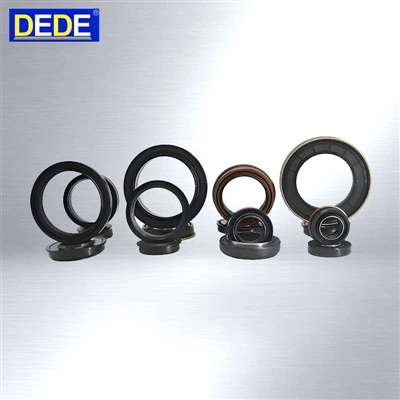
First, let’s start with the basics: what a V ring seal is, and how it works. Unlike some other seal types that are designed to fit into a gland or groove, V ring seals are elastomeric rings that are pressed onto a rotating shaft and deform slightly when installed to create a tight, dynamic seal between the shaft and a housing wall. Their primary job is to prevent lubricant from leaking out of bearings, gearboxes, or other rotating assemblies, and to keep dirt, dust, and moisture from getting in. They’re simple, cost-effective, and used across nearly every industry—from agriculture and automotive to mining and food processing.
Now, noise in rotating machinery typically comes from a few main sources: friction between moving parts, cavitation in fluids, vibration from unbalanced components, and the interaction between seals and the shaft. That last one is where V ring seals come in. When a seal is properly fitted, it creates a thin film of lubricant between its inner lip and the shaft surface. That film is critical—it reduces metal-to-metal contact, cuts down on friction, and minimizes the chance of noise from rough, direct contact. But if the seal is mis-sized, misinstalled, or worn out, that thin lubrication film breaks down. The lip starts to drag against the shaft, creating a rhythmic or irregular friction that translates into audible noise.
So what’s the actual noise level when a V ring seal is operating, under normal conditions? Let’s get specific here. In a properly installed, well-lubricated application, V ring seals contribute very little to overall noise levels—usually less than 5 decibels (dB) above the baseline noise of the equipment itself. To put that in perspective, a normal conversation is about 60 dB, a quiet library is around 40 dB, and a typical industrial machine without excessive seal issues runs at about 70-80 dB. That means a healthy V ring seal adds barely a detectable hum to the mix. The problem comes when something goes wrong with the seal.
If a seal is damaged—say, the lip is cut, cracked, or hardened from age or chemical exposure—it will start to create more friction. That friction can generate noise anywhere from 5 dB above baseline to as much as 15 dB or more, depending on the severity. A 10 dB increase is actually perceived as twice as loud to the human ear, so that jump from 75 dB to 85 dB would feel like the machine is twice as noisy. Even worse, if the seal is too tight around the shaft (which is a common mistake during installation), the constant drag can cause a high-pitched squeal that’s clearly audible during operation.
I’ve seen this firsthand in a client’s agricultural combine last year. The farm manager called us complaining that his machine’s grain auger gearbox was suddenly much louder than usual, to the point where his operators had to wear ear protection just to work near it. He’d replaced a standard lip seal a few weeks prior, but the new one was too tight—he’d installed it without checking the shaft diameter, so the lip was pressing too hard against the steel shaft. The result was a consistent, high-pitched squeal that registered at 92 dB, well above the machine’s normal 78 dB. We recommended a V ring seal matched exactly to the shaft’s outer diameter, and after installation, the noise dropped right back to baseline. That’s one of the biggest advantages of V ring seals over other types: their flexibility means you just need to match the inner diameter to the shaft, not a precise groove, which reduces the chance of over-tightening and the noise that comes with it.
Another factor that affects noise from V ring seals is shaft speed. The faster the shaft rotates, the more the seal’s lip interacts with the shaft surface, and the more potential there is for noise. At low speeds (under 100 revolutions per minute, or RPM), a properly functioning V ring seal is almost inaudible. At medium speeds (100-1000 RPM), you might hear a very faint, consistent hum if you stand right next to the machine, but nothing that disrupts work. At high speeds (over 1000 RPM, which is common in automotive engines, high-speed conveyors, and machine tools), the seal’s lip still maintains that thin lubrication film if it’s made of the right material, so noise stays low. But if the material is too hard or too stiff, it can’t flex with the shaft’s slight vibrations, leading to increased friction and noise even at moderate speeds.
That’s why material selection is so critical for our V ring seals. We use different elastomers—nitrile, Viton, EPDM, silicone—depending on the application, and each has a different hardness, flexibility, and friction coefficient. For example, nitrile rubber is a common choice for general industrial use because it’s durable and has good friction properties; it keeps noise low while still creating a reliable seal. Viton is better for high-temperature or chemical-exposure environments, and we engineer the lip of Viton V ring seals to be slightly more flexible to reduce friction and noise, even in extreme conditions. Silicone V ring seals are used in food processing, where we need a non-toxic material that’s also low-noise, since food processing facilities often have strict noise limits to keep workers comfortable.
I should also mention that vibration from other parts of the equipment can amplify seal-related noise. A V ring seal that’s working perfectly will still resonate a little if the shaft is unbalanced or the housing is loose. But because V ring seals are mounted on the shaft, not pressed into a fixed housing, they can absorb some of that vibration, reducing overall noise compared to stationary seals. That’s another key difference from, say, O-rings that are installed in grooves: O-rings can’t move to accommodate vibration, so any vibration transfers directly to the seal, creating more noise over time. V ring seals’ slight flexibility lets them “give” a little, which dampens that vibration and keeps noise lower.
Of course, there are cases where V ring seal noise is unavoidable. If the shaft is worn—scored, pitted, or has a rough surface from use—the seal’s lip will rub against those imperfections, creating a rhythmic noise similar to running a finger over a rough piece of wood. That’s not the seal’s fault, though; it’s a sign that the shaft needs to be re-machined or replaced. A good seal can only do its job if the mating surface is smooth enough, so if you’re hearing noise from a V ring seal, checking the shaft surface and the fit of the seal is always the first step, not just replacing the seal.
I’ve had customers tell me they thought all seals created a lot of noise, but after switching to our V ring seals, their equipment noise dropped noticeably. One manufacturer of packaging machinery reported a 12 dB reduction in noise after replacing their old piston seals with V ring seals for their conveyor bearings. That 12 dB difference isn’t just quieter—it meant they could reduce the number of ear protection stations on the factory floor, which saved on costs and made the workplace more comfortable for their workers.
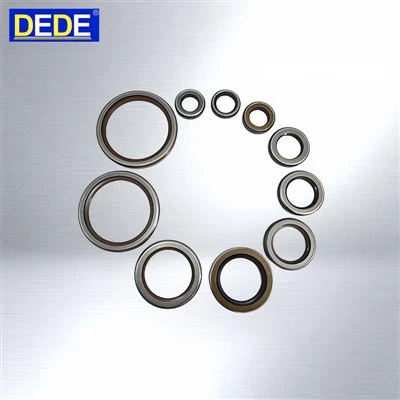
So to answer the original question: the noise level when a V ring seal is in operation, under normal, properly fitted conditions, is negligible—usually less than 5 dB above the baseline noise of the equipment. The key is proper installation, matching the seal material to the application, and ensuring the shaft is in good condition. If the noise is higher than that, it’s almost always a sign that the seal is mis-sized, damaged, or incompatible with the operating environment, and a quick adjustment or replacement can bring that noise back down.
V Ring Seal As a supplier, we don’t just sell seals—we work with our customers to make sure their equipment runs quietly and efficiently. If you’re noticing unexpected noise from rotating assemblies, or you’re looking to upgrade seals to reduce overall equipment noise, we can help you select the right V ring seal for your application, whether it’s for a mining truck, a food processing line, or a high-speed industrial machine. Don’t let excessive noise cut into productivity or harm worker hearing—reach out to us to discuss your needs, and we’ll help you find a solution that keeps both your seals and your equipment running smoothly.
References
- Flitney, R. K. (2007). Sealants and Sealing Technology (2nd ed.). William Andrew Publishing.
- Bhushan, B. (2013). Introduction to Tribology (2nd ed.). John Wiley & Sons.
- American National Standards Institute. (2018). ANSI S12.60-2018: Acoustics – Noise Control in Workplaces. ANSI.
- Society of Automotive Engineers. (2020). SAE J1209: Seal Design for Rotating Shafts. SAE International.
DEDE SEAL Co., Ltd.
DEDE Seal Co., Ltd. is one of the most experienced v ring seal manufacturers and suppliers in China for over 35 years, featured by quality products and good price. Please feel free to buy bulk customized v ring seal made in China here from our factory. Welcome to contact us for pricelist.
Address: Hunan Road, Pudong New Area, Shanghai, China
E-mail: info@dedeseal.com
WebSite: https://www.dedesealing.com/
