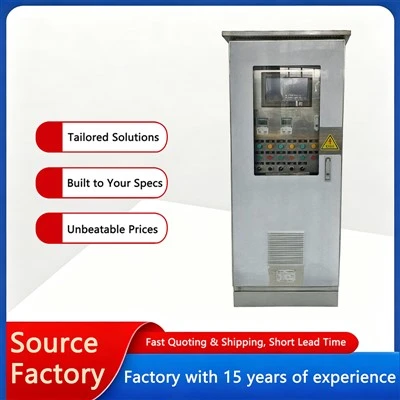
Hey there, this is Jake from the power distribution cabinet team at [our company] – and let’s be real, nothing kills a day faster than a random power supply failure in a distribution cabinet. I’ve heard it from installers, facility managers, even electricians on-site: “The cabinet just died, no warning, now we’re stuck.” As someone who’s been selling, supporting, and walking through troubleshooting these exact issues for 8 years, I get it. It’s not just a dead outlet or a flickering light – a failed power supply in a distribution cabinet can halt production, shut down office spaces, or cause way more headaches than it’s worth. Power Distribution Cabinet
Today, I’m breaking down how to troubleshoot this like you’re right there on the job, no fancy jargon or useless steps. This isn’t some textbook guide – it’s the stuff I’ve seen work when I’m fielding calls at 2 a.m. from a client whose warehouse cabinet went kaput. Let’s dive in.
First, before you even touch the cabinet, safety is non-negotiable. I can’t stress this enough. Distribution cabinets handle high voltage, even if it looks like nothing’s wrong. First, lock out and tag out the main power supply to the cabinet – don’t skip this. If you’re not comfortable working with electricity, stop right here and call a licensed electrician. No story is worth a shock, trust me.
Now, let’s start with the quick, easy checks that people usually skip. 9 times out of 10, the issue isn’t the power supply itself – it’s a loose connection or a tripped breaker that no one noticed. Let’s walk through these step by step.
Step 1: Verify the input power. This is the first thing I always tell clients to check, because it’s the simplest. Grab a multimeter (a basic one works, no need for fancy) and test the line voltage coming into the cabinet. Your cabinet’s specs are probably 120V, 240V, or 480V – match what’s printed on the label. If the input voltage is way lower or higher than it should be, that’s not the power supply’s fault – that’s a problem with the main grid or a feed line outside the cabinet. For example, last month a manufacturing client called me panicking because their cabinet went dead; turns out the local grid had a transformer glitch, and their input was only 180V instead of 480V. They thought the power supply was broken, but it was just external power issues.
Step 2: Check the breakers and fuses. Inside the cabinet, there are usually main breakers and branch breakers that feed power to the supply unit. Take a quick look – is any breaker tripped? It’ll be in the middle, not fully on or off. If it is, flip it all the way off, then back on. If it trips again immediately, that’s a sign of a short circuit somewhere, not just a random glitch. Fuses are another angle: if your cabinet uses fuses instead of breakers, check if any are blown. A blown fuse will have a broken metal strip inside, or a cloudy look in the glass. Never just replace a fuse without figuring out why it blew – that’s a quick fix that’ll backfire.
Step 3: Inspect loose connections. I’ve seen this so many times: a wire got jostled during installation, or a vibration from heavy equipment over months loosened a terminal. Open the cabinet (remember, power is off!) and check all the wires connected to the power supply’s input terminals, and the ground wire too. Give each a gentle tug – if it moves, tighten the terminal screw. Pro tip: Don’t over-tighten, that strips the screw or breaks the wire lug. I keep a small torque driver in my tool bag for this – it’s cheap and avoids mistakes.
Okay, now we’ve ruled out the easy stuff. If the input power is good, breakers/fuses are fine, connections are tight, then it’s likely the power supply itself that’s failed. Let’s test that.
First, check the power supply’s LEDs. Most modern distribution cabinet power supplies have status lights: a green “power on” LED, a yellow “fault” LED, sometimes a red one. If the green light is off, that means the supply isn’t getting power to run internally, even if the input is good. If the yellow or red light is on, that’s a fault code – some supplies have a manual that lists what each code means, so flip to that first. For example, a common fault is overvoltage, which might mean the supply’s internal protection kicked in.
Next, test the output of the power supply. Set your multimeter to the DC voltage setting (most cabinet power supplies are DC output, not AC) and touch the probes to the supply’s output terminals. Match the voltage to the label – if the supply is rated for 24V DC, it should read around 23-25V, not 0V or 30V+. If it reads 0V, that’s a clear sign the supply is dead. If it reads way too high, the supply’s internal regulation is broken.
Wait, but before you jump to replacing the supply, let’s rule out a bad load. Sometimes the problem isn’t the supply – something connected to its output is drawing too much power, which makes the supply shut down. Disconnect all the loads connected to the power supply (lights, sensors, control circuits, whatever) and test the supply again. If it works now, you know one of the loads is the issue. Reconnect them one by one, testing after each, to find the faulty one. Last year, an office client had a supply failure that turned out to be a broken space heater plugged into the cabinet’s output – it was drawing way too much current and tripping the supply’s internal overload.
If none of that works, it might be an internal component failure. Power supplies have capacitors, diodes, transformers – parts that wear out over time, especially in harsh environments (like warehouses with dust, temperature swings, or humidity). For example, capacitors can dry out after 5-7 years, which makes the supply fail suddenly. If you’re comfortable with basic electronics, you can check for bulging capacitors – the top will be rounded, not flat. But if you’re not, don’t mess with internal parts – that’s a good way to make a small issue way worse.
Now, when should you consider replacing the power supply vs. getting it repaired? If your cabinet is under 5 years old, a lot of suppliers offer repair services or replacement warranties. If it’s older, or the repair cost is more than half the price of a new supply, it’s usually better to replace it. Also, if you’re having repeat power supply failures, that’s a sign the cabinet might not be sized right for your load, or there’s a bigger issue with the cabinet’s ventilation (dust can build up and overheat the supply).
A few pro tips to avoid future power supply failures, since we’re in the middle of troubleshooting:
- Keep the cabinet clean: Dust, dirt, and debris block ventilation, which makes components overheat. I’ve seen cabinets in manufacturing plants that needed a good blowout with compressed air once a quarter to prevent failures.
- Check for loose connections during routine maintenance: Every 6 months, do a quick visual check of terminals and wires – prevents the jostled-loose issue we talked about.
- Match the power supply to your load: Don’t get a supply that’s just barely enough for your devices – add 20-30% headroom. That way, you don’t overload it if you add new equipment later.
Now, a quick note from our team here: we’ve seen every type of power supply failure, from the obvious (tripped breaker) to the tricky (bad capacitor). If you’ve gone through all these steps and still can’t figure it out, or you need a replacement power supply for your distribution cabinet, reach out to us. We don’t just sell cabinets – we have a support team that’ll walk you through troubleshooting, or send a technician on-site if you need it. No hidden fees, no complicated processes, just someone who knows their stuff when you’re stuck.

Wait, one last thing: if you’re dealing with a commercial or industrial cabinet, make sure you’re using the right tools and following local electrical codes. Cutting corners here can lead to more problems down the line, so always prioritize safety.
Power Distribution Cabinet References
- National Electrical Code (NEC) Handbook, Article 408: Switchboards and Panelboards
- Occupational Safety and Health Administration (OSHA) Lockout/Tagout Standard, 29 CFR 1910.147
- Power Supply Troubleshooting Guide, International Association of Electrical Inspectors (IAEI), 2022
- Failure Analysis of Low-Voltage Power Supplies in Distribution Cabinets, IEEE Transactions on Industrial Electronics, Vol. 68, No. 12, 2021
Hangzhou Dagang Electric Co., Ltd.
As one of the most experienced power distribution cabinet manufacturers in China, our products have good reputation in the market. We warmly welcome you to wholesale high quality power distribution cabinet for sale here from our factory. If you have any enquiry about cooperation, please feel free to email us.
Address: 1st Floor, Building 11, No.10 Lingang Road, Renhe Subdistrict, Yuhang District, Hangzhou City
E-mail: fang@dagangelectric.com
WebSite: https://www.hzdg-electric.com/
