If you’re in the electrical equipment game, chances are you’ve heard of a T1 15KA surge protective device (SPD) before—even if you didn’t know its exact deal. Let me cut the fluff and break it down like I would to a fellow contractor or facility manager who’s just tired of Googling “what does this thing actually do” at 2 a.m. when a power outage just fried a piece of gear. First off, I’m not some stuffy engineer hiding behind jargon; I’m the owner of a company that’s been supplying these exact T1 units for 8 years, and let me tell you, 9 out of 10 times when a client calls us panicking about a lightning strike, their old 10KA generic SPD is the reason they’re out a few thousand bucks. So let’s get into why our T1 15KA isn’t just another box we sell. T1 15KA Surge Protective Device

First, let’s ground this in what a surge even is, because if you don’t get that, you’ll never get why this device matters. Surges are those random, violent spikes in electrical voltage—way higher than the usual 120/240V most homes and businesses run on. Two main types: internal ones from things like a big AC unit kicking on or a microwave shorting, but the big, deadly ones are external—lightning. When lightning hits a power line, it can send a surge that’s 100,000+ volts surging through the grid, and if there’s nothing stopping it, that surge’ll travel straight into your building, through your breaker panel, and into every piece of sensitive gear you have—servers, HVAC controls, security systems, even the fancy LED lighting you just dropped cash on. I’ve seen a single lightning surge take out 12 CCTV cameras in a small retail space, all because their old SPD was rated for 5KA, which is basically a speed bump against a semi.
Now, the T1 classification—this isn’t just a random code I threw on the box. T1 is the IEC (International Electrotechnical Commission) standard for SPDs that are meant for primary surge protection, the first line of defense right at the main electrical service entrance. That’s different from T2 or T3 units, which are for secondary protection inside your building, closer to specific gear. A lot of clients mix these up and buy a T2 because it’s cheaper, but that’s like locking your front door but leaving the back window wide open. The T1 15KA I sell is built specifically to take that initial, massive surge head-on before it even gets past your main panel.
Let’s talk about that 15KA number too—kiloamps, that’s how much current the device can divert away from your system in a single surge. Wait, let’s make that real: if a lightning strike sends a surge with, say, 20KA of current toward your building, a 10KA SPD would only handle half of that. The other 10KA would blast through, fry your breaker, and maybe your main transformer, or even more sensitive gear down the line. Our 15KA unit is rated for 15,000 amps of impulse current—meaning it’s tested and proven to handle that full, brutal surge from a direct or near-direct lightning hit without blowing up, melting, or dying after one use. I once had a client who had a tree right next to his main power line; he’d gone through 3 cheap 10KA SPDs in two years. Switched to our T1 15KA three years ago, hasn’t had a surge issue since. That’s not a sales line—that’s actual feedback from a guy who’s seen the damage.
So how does it actually do this? Don’t get bogged down in the science, but I’ll keep it simple. Inside the T1 SPD, there’s a component called a metal oxide varistor (MOV)—that’s the workhorse. MOVs are like voltage-sensitive sponges: when the regular voltage comes through, they just let it pass right through, no problem. But when a surge hits, jacking the voltage up way past the safe level, the MOV activates, becomes a conductor, and diverts that excess current straight to the ground wire, not into your building’s internal wiring. The 15KA rating means the MOV is sized, constructed, and tested to handle that massive surge load without failing. Cheaper SPDs use smaller MOVs that burn out the first time they see a big surge—our T1 units use high-grade MOVs that last for multiple surge events, even in areas with frequent lightning.
Here’s a big point most supply houses won’t tell you: not all T1 15KA units are equal. I’ve had clients come to me with a competitor’s T1 unit that only has a 10KA actual rating, even though it says 15 on the box. How? They fudge the testing, or use inferior materials that can’t handle the full load. Our T1 units are third-party tested to strict IEC 61643-1 standards, so you know exactly what you’re getting: 15KA of surge diversion, built for primary service entrance protection. That’s why so many electricians in the Southeast and Midwest (where lightning is way more common) come to us—they know if they spec our T1 15KA, their client’s gear is covered, not just until the next big storm.
Wait, let’s cover use cases because that’s where the function actually matters. You wouldn’t put a T1 15KA in a residential garage, right? No—wait, actually, if you have a home office with servers, or a well pump system, or a security setup that’s worth protecting, that T1 unit at the main panel is non-negotiable. But for commercial buildings: retail stores with POS systems, warehouses with control panels, office buildings with server rooms, data centers, even schools with AV and security systems. Those are the places where a surge can cost tens of thousands in downtime and repairs. I had a small data center client a couple years back who skipped our T1 unit, used a generic T2, and a lightning surge took down their backup servers for 3 days—cost them $120k in lost revenue. Switched to our T1 15KA, and last year when a storm rolled through, their only issue was a tripped breaker, no gear damage. That’s the function working exactly as it’s supposed to: stop the surge before it can do any real harm.
Another thing the sales hype doesn’t mention: lifespan. A lot of people think SPDs are set-it-and-forget-it, but they do degrade over time, especially from frequent surges. Our T1 15KA units have built-in status indicators—little LED lights that tell you if the device is still working, or if it’s time to replace it. That’s a big deal for maintenance teams who don’t want to have to test every SPD in a 10,000 sq ft building every quarter. If the red light’s on, you swap it out; if the green is on, it’s still doing its job. Cheaper units don’t have that, so you might be running on a broken SPD for months without knowing it.
Let’s address the “wait, can’t I just get a whole-house surge protector from the big box store?” thing. Those are usually T2 or T3 rated, made for small surges, not the full lightning surge. The big box ones max out at like 5KA or 10KA, and they’re meant to protect small electronics like TVs, not your entire electrical system. Our T1 15KA is for the heavy lifting—primary protection, stopping the surge at the source before it splits off to every circuit in your building. That’s the key function: it’s not a gadget for your TV, it’s a critical electrical component that’s part of your building’s infrastructure, just like your breaker panel or your main transformer.
I get it, buying electrical equipment can feel like a chore, and there’s a lot of jargon that makes it hard to tell the good stuff from the junk. That’s why I started this company, actually— I saw too many clients getting stuck with cheap, overrated SPDs that didn’t do what they said. Our T1 15KA isn’t the cheapest unit on the market, but it’s the one that’ll actually work when you need it most. I’ve been in this long enough to know that when a storm is rolling in, and you’re staring down the possibility of $100k in damage, you don’t care about saving $50 on a surge protector. You care about having something that’s going to hold up.
So to wrap this up, let’s make sure we’re crystal on the function of a T1 15KA surge protective device: it’s the first line of defense for your building’s entire electrical system, designed to divert massive, lightning-induced surges (up to 15,000 amps) away from your internal wiring and sensitive gear, tested to strict industry standards to not burn out or fail after a single surge, and built to handle the heavy, life-or-death surge load that smaller, cheaper SPDs can’t. It’s not a add-on—it’s a critical component that prevents downtime, saves you money on repairs, and protects the stuff that keeps your business running or your home functioning.
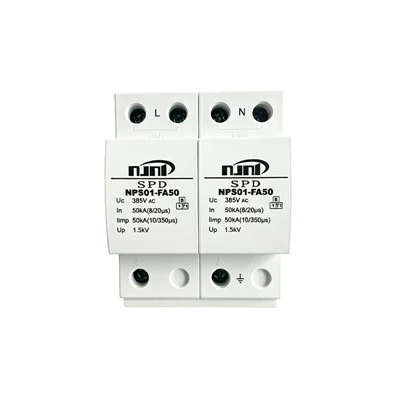
If you’re looking to spec these for a project, need to replace a failed unit, or just have questions about whether our T1 15KA is right for your space, don’t overcomplicate it. Reach out to chat—we’re happy to walk through what you need, no pushy sales talk, just straight answers from a guy who’s been in the field and in the supply game for years. We’ve got units in stock, ready to ship, and we work with electricians, facility managers, and contractors all over the country who trust our product to do exactly what it’s supposed to when the next storm hits.
Surge Protection Device References
IEC 61643-1: Surge protective devices connected to low-voltage power systems – Requirements and test methods
Underwriters Laboratories (UL) 1449: Standard for Safety for Surge Protective Devices
Nanjing Ningpu Lightning Protection Equipment Manufacturing Co., Ltd.
As one of the most professional T1 15ka surge protective device manufacturers and suppliers in China, we’re featured by quality products and good price. Please rest assured to buy customized T1 15ka surge protective device made in China here from our factory. Also, pricelist is available.
Address: Building 1, No.20 Shengyuan Road, Lishui Economic Development Zone, Nanjing City, Jiangsu Province, China
E-mail: 3796023563@qq.com
WebSite: https://www.npspd.com/
